
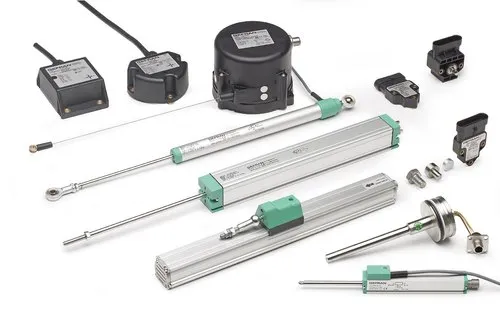
Overview: Pressure Transmitters convert pressure measurements into standardized electrical signals, enabling accurate monitoring and control in various application.
Key Features:
1.Potentiometric Position Transducers: Displacement Measurement, Resistive Element, Output Signal,
Output Signal: The position of the wiper determines the resistance, which can be easily converted into an electrical signal.
Advantages: Low cost, simple construction, and strong output signal.
Disadvantages: Limited lifespan due to wear and tear on the sliding contact, susceptible to noise, and relatively low accuracy compared to other types of transducers.
2. Potentiometric Pressure Transducers: Pressure Sensing, Potentiometer Integration
Output Signal: The change in resistance corresponds to the applied pressure, providing an electrical output signal.
Advantages: Small size, low cost, and strong output signal.
Disadvantages: Lower accuracy compared to other pressure transducer technologies, susceptible to wear and tear, and limited temperature range.
Conclusion: Position Transducers detect the position of an object and convert it into an electrical signal, providing essential feedback for automation and control systems. Proportional–Integral–Derivative (PID) control is a key concept in control applications like robotics and automotive systems. It ensures system stability, enhances response time, and offers precise control.